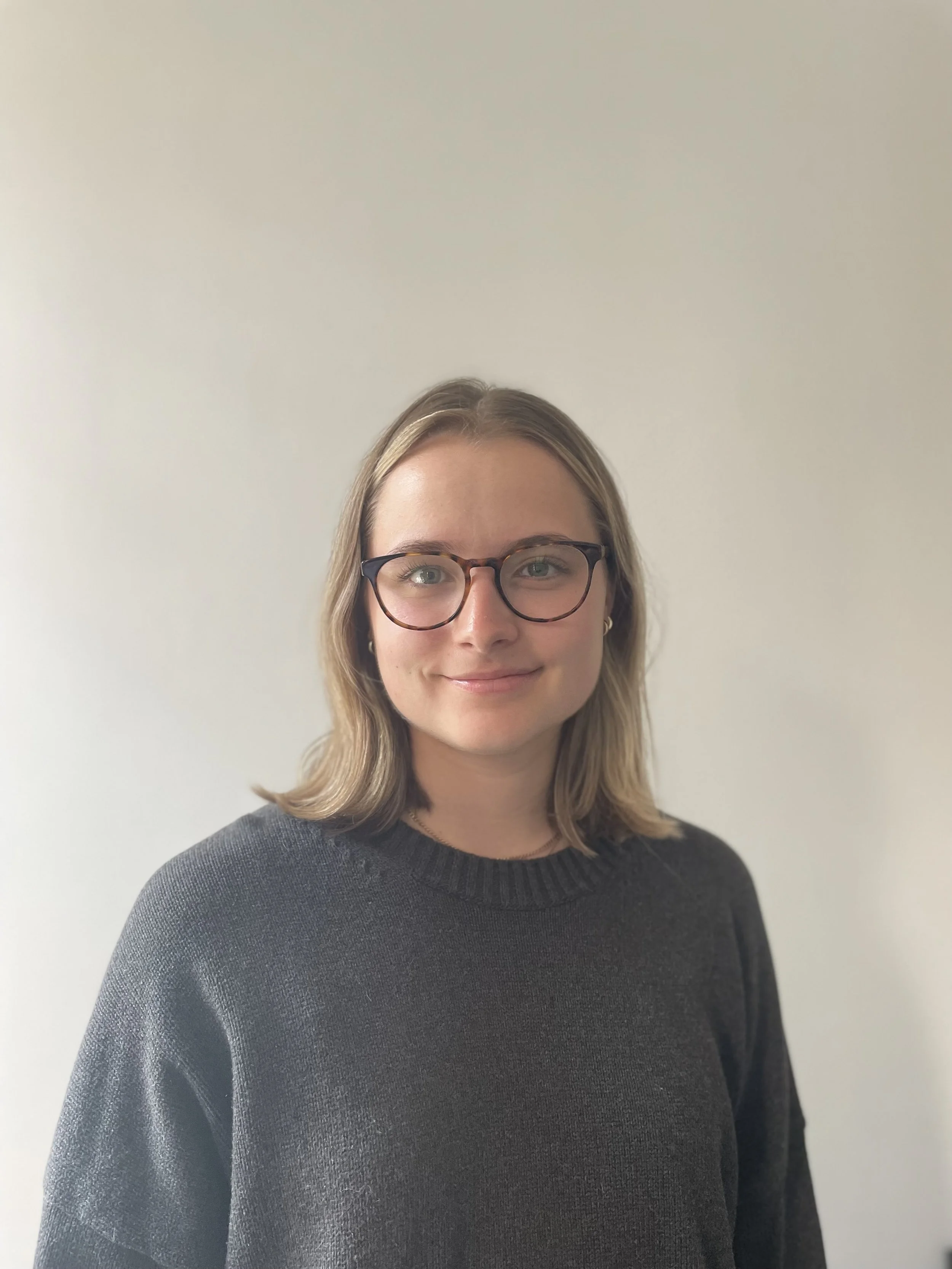
Hey, I’m Dominique!
My Background
After graduating from Columbia University School of Social Work, I worked for 5 years in NYC, where I specialized in treating children, adolescents, young adults who experienced child abuse, and treating parents whose children experienced child abuse. During this time, I was supervised and trained by some wise psychologists, who helped shape me into the therapist I am today!
In 2025 I relocated to Western New York, which is where I currently live with my Husband, Daughter, and cat. In my free time I enjoy playing with my daughter, reading, watching TV, making crafts, and rooting for the Bills.
I have found my niche in treating anxiety in all forms. While I do still work with many survivors with trauma related anxiety, I also have expanded to work with people who don’t necessarily identify with the word trauma! Anxiety is such a precarious feeling to treat, as it literally helps us stay alive! My simplified way to describe this type of therapy is helping to keep your anxiety limited to the places you want it to be, rather than getting rid of it entirely. I most often find myself supporting clients with health anxiety, social anxiety, obsessive tendencies, perfectionism, or conflict avoidance. I also have a lot of experience working with children with anxiety, and supporting parents of anxious children.
That said, if you’ve read this far and feel like you might be a good fit personality wise but are unsure if I treat what you’re seeking help with, feel free to schedule a consult. I practice with humility, and if I do not have the experience to help you with what you’re struggling with, I will absolutely tell you that!
My Expertise
My approach
I primarily use Cognitive Behavioral Therapy (CBT) as my baseline treatment model. This means that our work operates under the assumption that changing your thinking will lead to positive emotional and behavioral changes, AND because of this, our work would consist of talking a lot about your thoughts, your feelings, and your behavior.
CBT has a lot of evidence backing it, especially for anxiety. Some modern criticisms call it gaslight-y. I’m aware of these criticisms (I wrote about it here) but think a lot of it comes down to therapeutic style. I always validate the reasons why people develop unhelpful thoughts and focus on positive change. Even if we can logically articulate why a feeling doesn’t make sense, it doesn’t mean it will just vanish. While this is unfortunately one of the reasons why healing can be a slow process, I think clients appreciate the acknowledgment that sometimes feelings linger, and that’s completely normal.
Given the intimate nature of therapy, finding a therapist who you're comfortable with is usually more important than modality. I'm happy to chat over a free consultation call to help you decide if I would be the right fit for you!